Live Demo
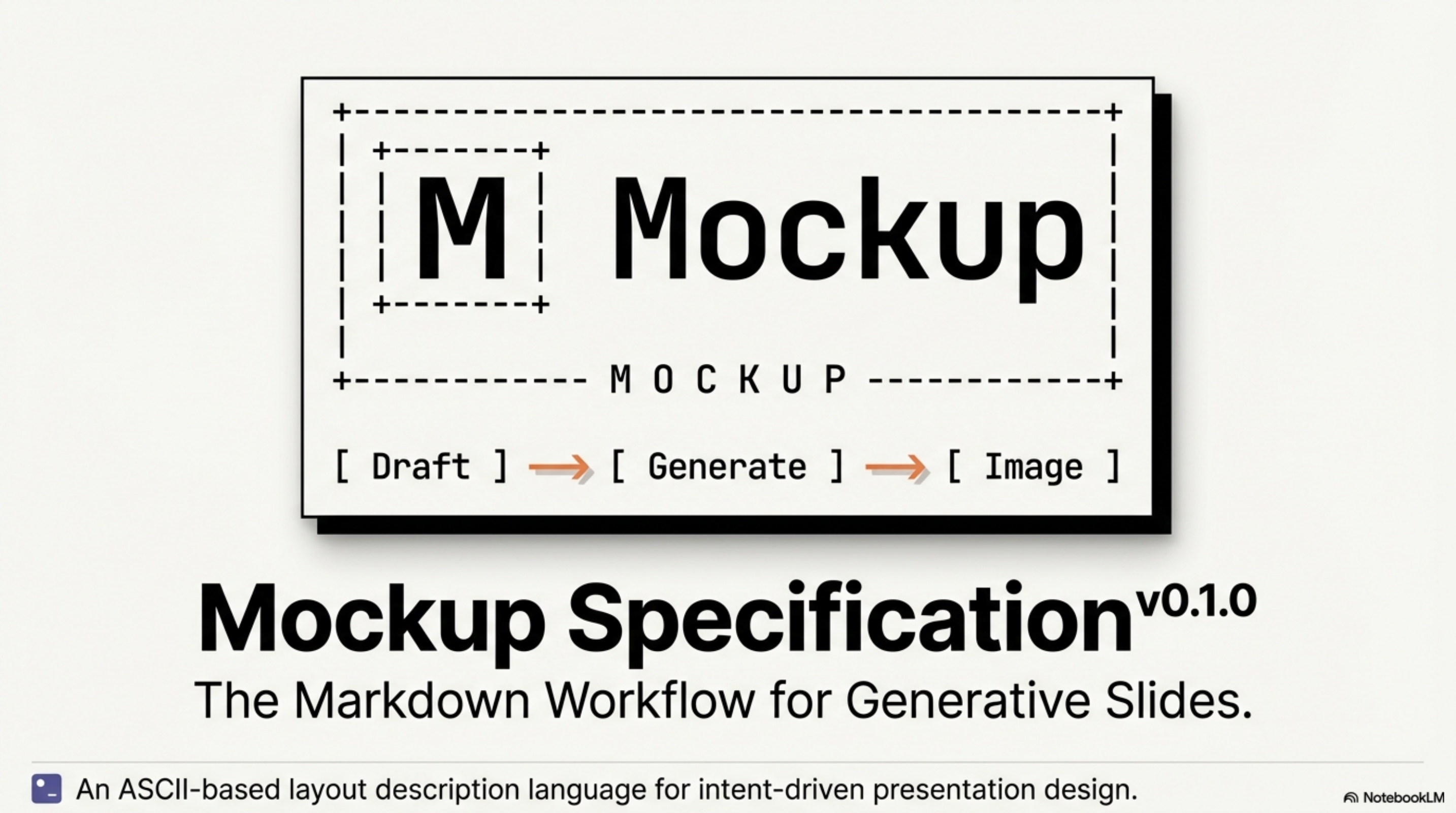
See how different AI models render the same mockup
┌────────────────────────────────────────────────────────────────┐
│                                                                │
│                         ┌─┐                                    │
│                         │M│ ockup                              │
│                         └─┘                                    │
│                   The Markdown for Slides                      │
│                                                                │
│      ┌──────────┐      ┌──────────┐      ┌──────────┐         │
│      │   📝    │      │    🤖    │      │    🎨    │         │
│      │ Draft   │ ───→ │ Generate │ ───→ │  Image  │         │
│      └──────────┘      └──────────┘      └──────────┘         │
│                                                                │
└────────────────────────────────────────────────────────────────┘

> Cover slide with workflow